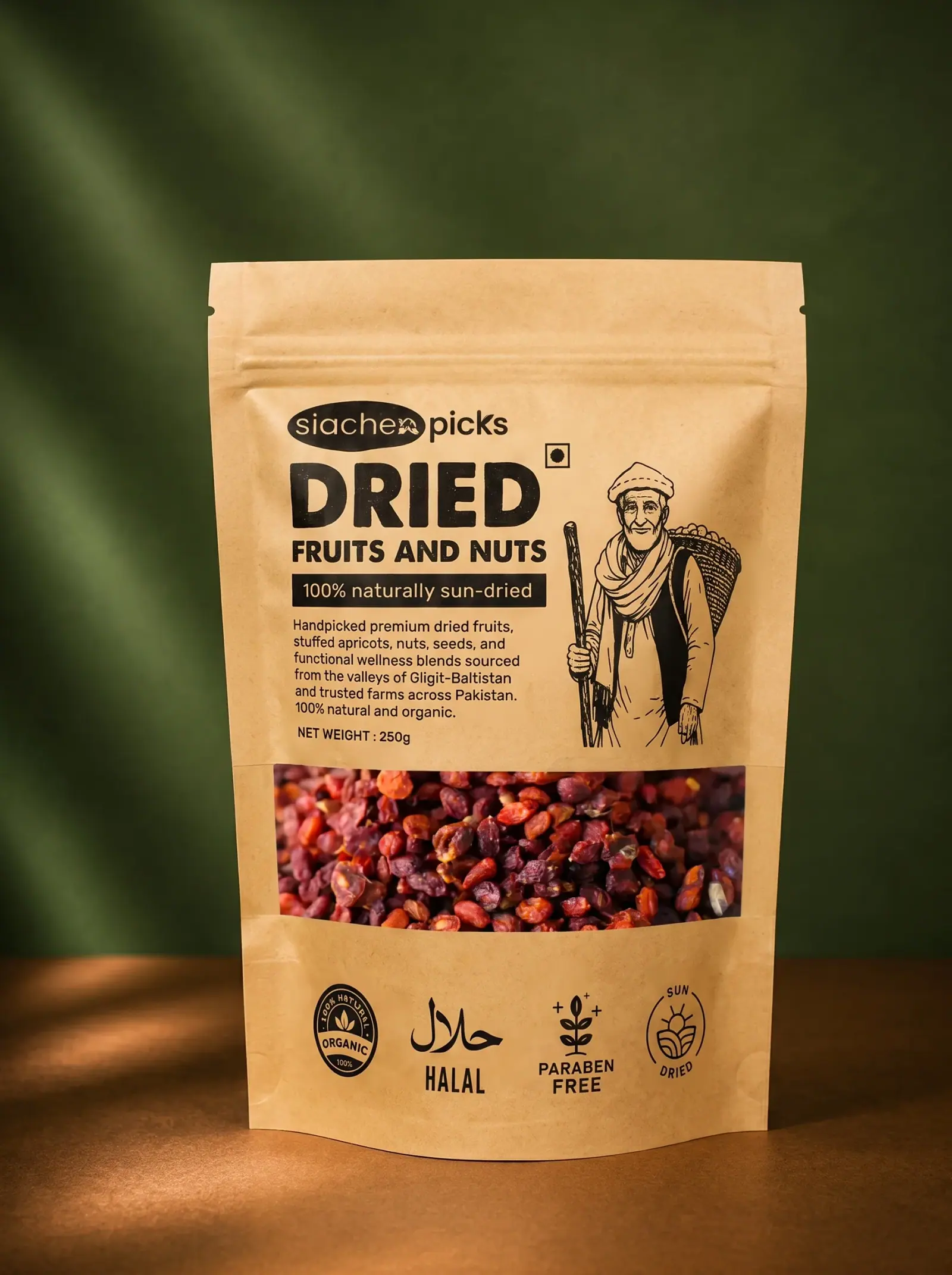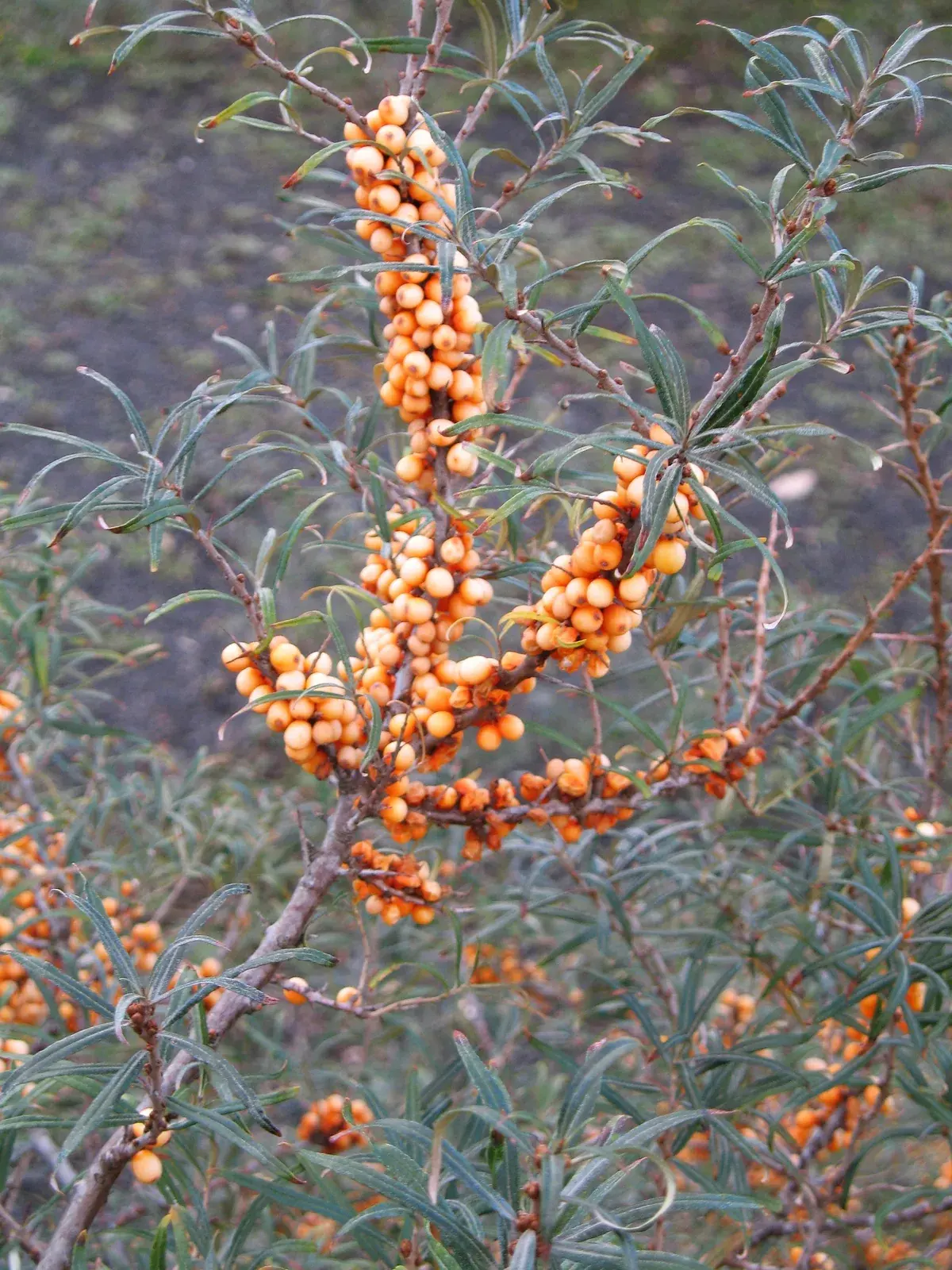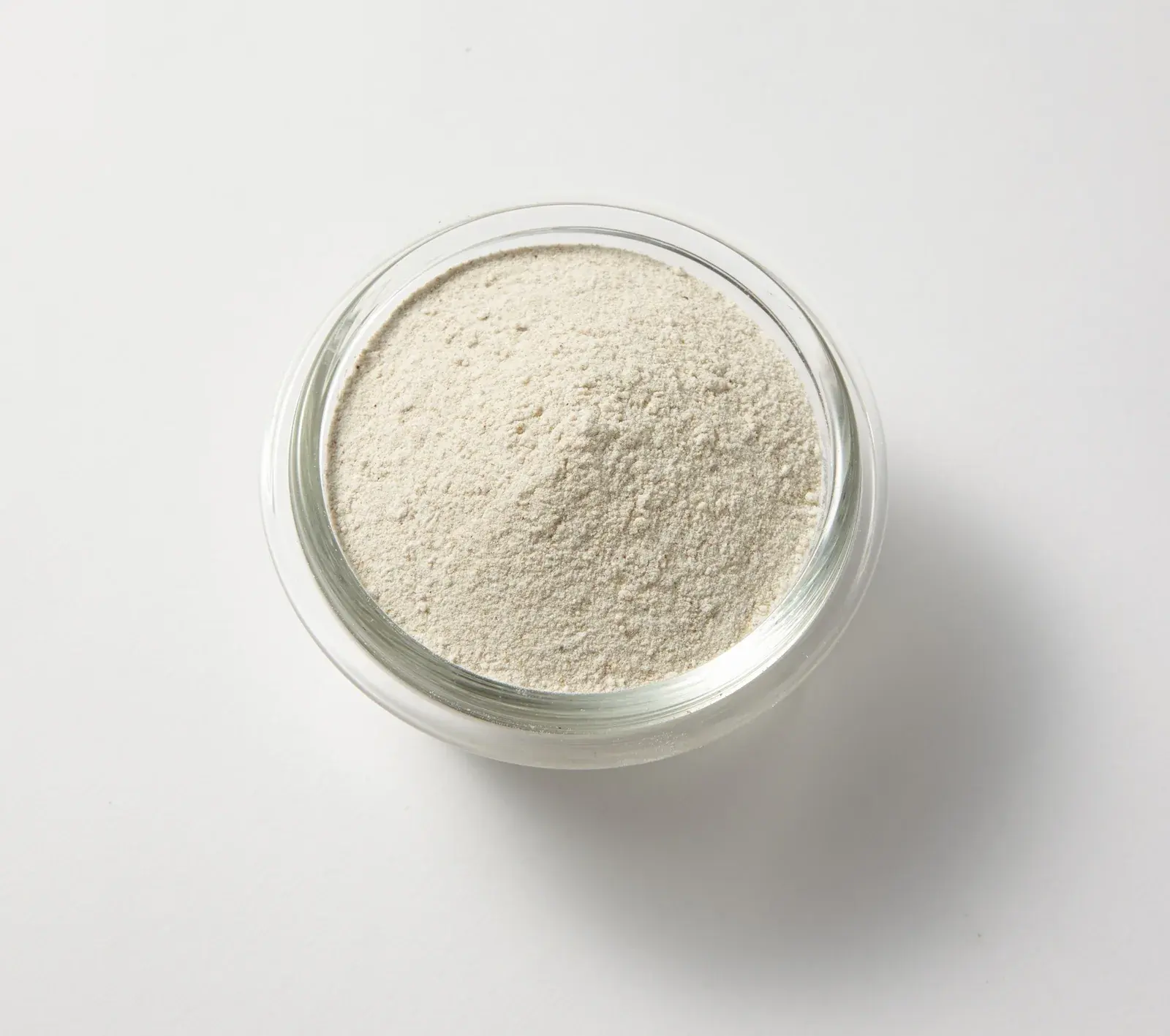
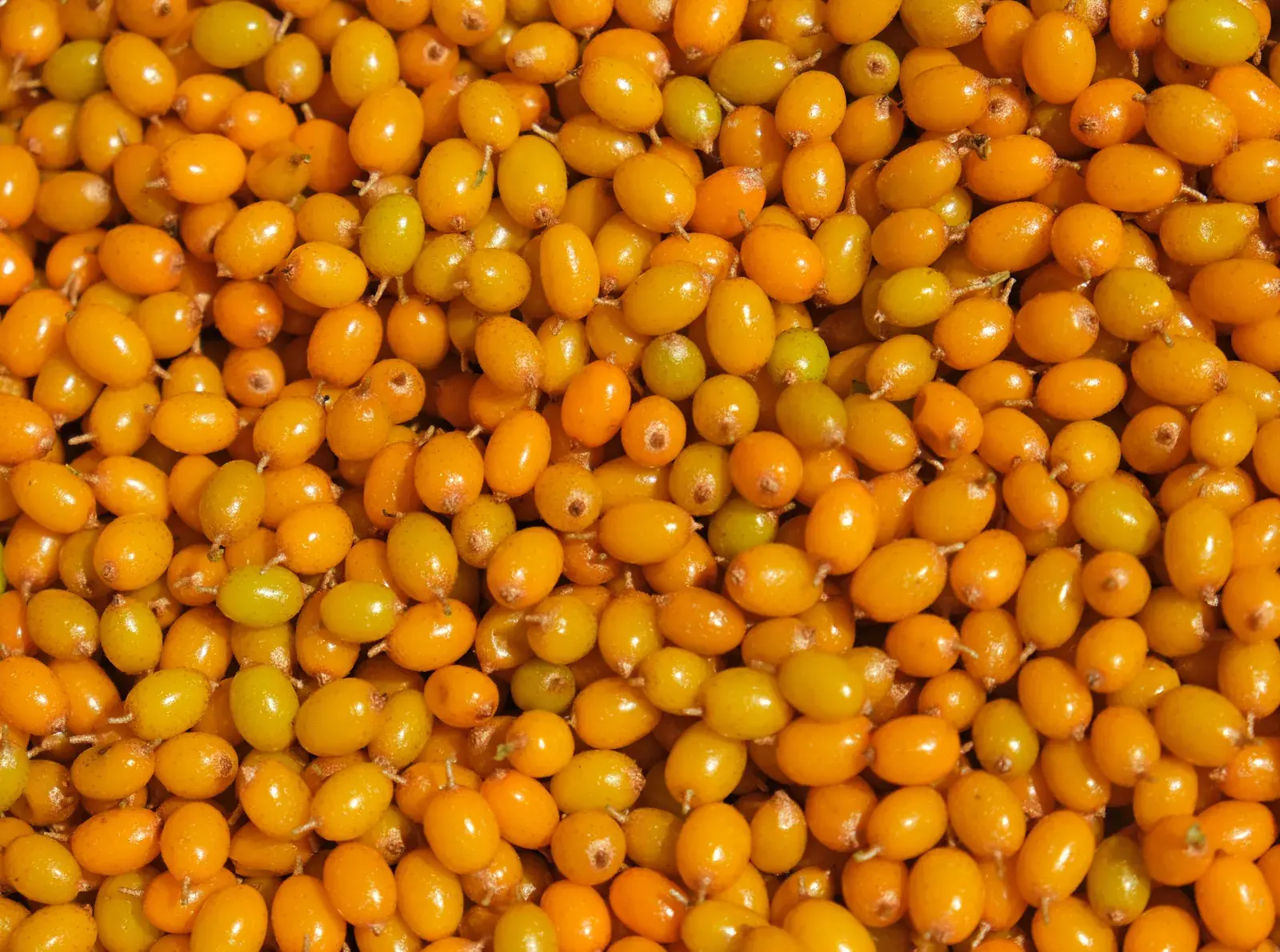
Sea buckthorn is a small orange berry with a flavour much bigger than its size. If you are exploring mountain ingredients in Pakistan, it is one to approach as a sharp, versatile food: something that adds character to a cup or a meal. Expect a sour first impression, not the familiar sweetness of raisins or dried apricots.
This guide explains what to expect, how to buy it thoughtfully and where it fits in an everyday kitchen. You can see the available pack options on our dried sea buckthorn product page.
What does sea buckthorn taste like?
Think tart fruit with a citrus-like edge and a slightly bitter finish. The strength will vary with the berries and how you prepare them. A weak infusion tastes very different from biting into a dried berry or using a concentrated puree.
That sharpness can be useful. Where a recipe needs contrast, sea buckthorn gives you another flavour to explore. Try it beside a creamy ingredient, dilute an infusion to suit your taste, or use a little in a fruit sauce. Begin with a small amount so the berry supports the dish instead of taking it over.
What about sea buckthorn benefits?
Sea buckthorn attracts attention partly because researchers have measured vitamin C in its berries. However, figures from a study of fresh berries or juice are not a nutrition label for every dried product. A food science study of processing and storage found changes in vitamin C during juice production and storage.
The practical point is to avoid assuming that a spoonful of dried berries or a strained drink provides a fixed vitamin amount. Variety, processing and the amount used all matter. We do not assign a vitamin C figure to your cup without testing that actual preparation.
The NIH vitamin C factsheet explains vitamin C's roles in normal immune function and collagen formation. That does not establish that a particular sea buckthorn product prevents illness. In one randomised trial involving 254 healthy volunteers, the sea buckthorn group did not have fewer or shorter common colds than the comparison group.
Enjoy the berry for its food value and flavour. A varied diet remains more useful than expecting one ingredient to solve a health concern.
Four questions to ask before buying
- Which form am I buying? Whole dried berries, a sweetened drink, powder and oil are different products with different uses.
- What else is in the pack? Read the ingredients rather than relying on the word natural. Check for added sugar, flavourings or other ingredients that matter to you.
- How much will I use? A smaller pack can be practical when you are trying the flavour for the first time.
- What information is available? Look for a clear product description, pack weight, storage instructions and a way to contact the seller.
Compare the same product form and pack weight when checking prices. A large bottle of diluted drink cannot be compared directly with a bag of dried berries. Be cautious about making a purchasing decision solely on impressive nutrition numbers with no product-specific evidence.
Easy ways to use dried sea buckthorn
Start with our sea buckthorn tea method, then adjust the strength to your preference. For breakfast, add a little cooled, strained infusion to plain yoghurt, tasting before adding more. For a savoury experiment, stir a small amount into a dressing and balance it with oil and the other ingredients in your recipe.
Keep your first experiment simple. If you combine several new ingredients at once, it becomes harder to work out which flavour you enjoy. When serving guests, describe the tartness first and let them choose whether to sweeten their drink.
Store it well and follow the label
Keep dried berries sealed, dry and away from sunlight and kitchen heat. Use a clean, dry spoon and follow the pack's storage and best-before instructions. Do not try to rescue visibly mouldy or damaged food by making tea with it.
If tart foods tend to bother you, choose a mild preparation or another ingredient you tolerate better. Use sea buckthorn as food, not as a substitute for prescribed care.
Is sea buckthorn the same as black goji?
No. They are different berries with different flavours and appearances. Sea buckthorn brings a pronounced sour note; black goji is often chosen for its coloured infusion. Our black goji guide explains that distinction. For sea buckthorn itself, browse the current product details and choose a pack that suits your cooking plans.